I still remember the exact moment this recipe was born, and it wasn't in some fancy test kitchen or a sun-drenched villa in Santorini. Nope, it was midnight on a Tuesday, my fridge contained exactly one block of feta that was dangerously close to its expiration date, and I had a bag of baby potatoes that had been sitting in my pantry so long they'd started sprouting little alien arms. My stomach was growling like an angry bear, my last three attempts at dinner had been embarrassing failures (don't ask about the carbonara incident), and I was ready to surrender to another night of sad cereal. But something magical happened when I tossed those potatoes with olive oil, shoved the feta in the middle of the pan, and hoped for the best. The smell that wafted from my oven twenty minutes later was so intoxicating that my neighbor actually knocked on my door to ask what I was cooking, and I've been chasing that high ever since.
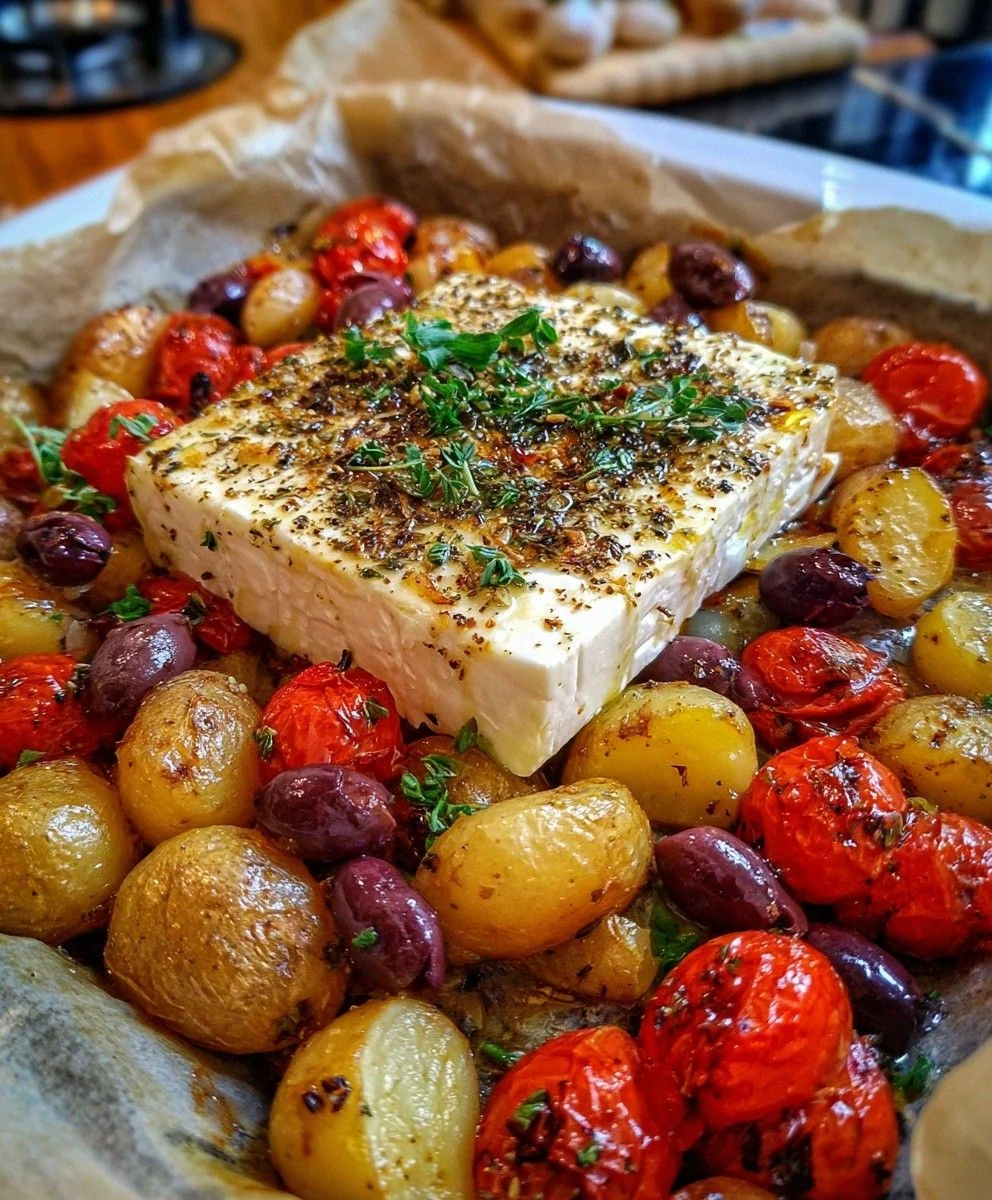
Picture this: golden baby potatoes, their skins blistered and crackling, nestled around a block of feta that's transformed into a molten river of creamy, tangy perfection. Cherry tomatoes have burst into sweet pockets of sunshine, and the whole pan is swimming in a sauce that makes you want to lick the ceramic right off the baking dish. The aroma hits you first — that intoxicating blend of oregano dancing with garlic, the nutty sweetness of roasted tomatoes, and that unmistakable Mediterranean perfume that transports you straight to a seaside taverna. When you break through that feta with your fork, it oozes into the potatoes like liquid gold, creating this unholy alliance of crispy edges and creamy centers that will ruin all other potato dishes for you forever.
Most recipes for Mediterranean potatoes completely miss the mark by treating the feta as an afterthought, crumbling it on top like some sad garnish. They don't understand that the feta needs to be the star of the show, the center of attention, the diva that commands the entire stage. When you treat it right — when you give it space in the middle of the pan and let it melt into a sauce — something absolutely magical happens. The potatoes don't just get seasoned; they get baptized in a sauce so addictive, you'll find yourself making excuses to cook this dish every single week.
Here's the kicker: this entire masterpiece comes together in one pan, takes less than 45 minutes from start to finish, and requires absolutely zero fancy technique. No parboiling, no fussy knife work, no watching over a hot stove while oil spits at your eyeballs. Just toss, bake, and prepare to have your mind blown by how something so simple can taste so incredibly sophisticated. Let me walk you through every single step — by the end, you'll wonder how you ever made it any other way.
What Makes This Version Stand Out
Block Feta Magic: While other recipes crumble feta like amateurs, we're using a whole block that melts into a luxurious sauce, creating a level of creaminess that will make you weep tears of joy.
One-Pan Wonder: Everything cooks together in a single baking dish, which means less dishes, less fuss, and more time to focus on the important things — like deciding whether to eat this straight from the pan or pretend to be civilized with plates.
Crispy Meets Creamy: The contrast between shatteringly crisp potato edges and the velvety feta sauce is textural heaven that will make your taste buds do backflips.
Zero Technique Required: If you can operate a can opener and remember to set a timer, you can nail this recipe every single time, even if you're the kind of person who burns water.
Party in Your Pan: Cherry tomatoes burst into sweet pockets of flavor, kalamata olives add briny depth, and oregano brings that unmistakable Mediterranean character that makes your kitchen smell like you're vacationing in Mykonos.
Make-Ahead Champion: Prep everything the night before, pop it in the fridge, and you can have dinner on the table faster than it takes to order takeout.
Leftover Gold: These potatoes actually taste better the next day, transforming into the most incredible breakfast hash or lunch bowl that will make your coworkers jealous.
Ingredient Flexibility: No baby potatoes? Use regular ones cut up. No cherry tomatoes? Grape tomatoes work. This recipe is your canvas, and you're the artist.
Inside the Ingredient List
The Flavor Base
Extra virgin olive oil isn't just a cooking fat here — it's the liquid that carries all the flavors and transforms them into something transcendent. You want a good quality oil because it forms the foundation of the sauce that will coat every potato. Don't be shy with it; we're using enough to create a proper sauce, not just prevent sticking. The oil picks up the garlic powder and oregano, blooming their flavors as it heats, and then mingles with the melting feta to create something that tastes like it came from a fancy restaurant but cost less than a coffee shop breakfast.
Garlic powder might seem like the lazy option, but it's actually the smart choice here. Fresh garlic can burn in the high heat we need for crispy potatoes, turning bitter and ruining the whole party. Powdered garlic disperses evenly through the oil, giving you consistent garlicky goodness in every bite without any risk of acrid burnt bits. Plus, when it mingles with the olive oil and feta, it creates this umami bomb that makes people close their eyes involuntarily when they taste it.
The Texture Crew
Baby potatoes are the unsung heroes of this dish because their skin-to-flesh ratio is absolutely perfect. The skin gets crispy and crackly while the inside stays creamy and fluffy, creating a two-texture experience that makes you want to keep eating even when you're full. Their small size means they cook quickly and evenly, so you don't end up with some potatoes raw while others turn to mush. If you can find the colorful medley bags with red, yellow, and purple potatoes, grab them — the visual appeal adds to the whole experience, and each color has a slightly different flavor profile.
Cherry tomatoes aren't just there for color — they're little flavor bombs that burst during cooking, releasing sweet-tart juices that balance the richness of the feta. As they roast, their natural sugars caramelize and concentrate, creating pockets of intense tomato flavor that cut through all that creamy, salty goodness. The contrast between the sweet tomatoes and salty feta is what makes this dish sing.
The Unexpected Star
Feta in block form is an entirely different creature from the pre-crumbled stuff, and once you experience the difference, you'll never go back. A whole block melts into a smooth, creamy sauce that coats the potatoes like a warm blanket, while pre-crumbled feta tends to dry out and never quite achieves the same luxurious texture. The block version has more moisture, which is exactly what we need to create that sauce that makes people lick their plates when they think nobody's watching.
The feta goes in the center of the pan because we want it to be the star that everything else orbits around. As it bakes, it transforms from a firm white block into a molten pool of tangy, salty, creamy perfection that you'll want to dive into face-first. The edges might get slightly golden, but the center stays spoonably soft, ready to mingle with the olive oil and create the most addictive sauce you've ever tasted.
The Final Flourish
Kalamata olives bring a briny, wine-like complexity that adds depth without overwhelming the other flavors. They're optional but highly recommended because they provide those little salty pops that keep your palate interested. If you're not an olive person, capers work beautifully too, or you can just load up on extra tomatoes for sweetness.
Fresh herbs added at the end aren't just garnish — they're bright, aromatic elements that wake up all the cooked flavors and make everything taste fresh and vibrant. Basil brings a sweet, almost anise-like quality, while parsley adds a clean, green note. The key is adding them right before serving so they stay bright and don't wilt into sad, brown flecks.
The Method — Step by Step
- Preheat your oven to 425°F (220°C) and position a rack in the middle. This temperature is crucial — hot enough to produce crispy potato edges but not so hot that the feta seizes up and becomes grainy. While it's heating, grab your largest baking dish or rimmed baking sheet. You want something with enough surface area that the potatoes can spread out in a single layer, because crowding leads to steaming, and steaming is the enemy of crispiness. This is the moment when your kitchen starts to feel like something special is about to happen.
- Wash and dry your baby potatoes thoroughly, then cut any larger ones in half so they're all roughly the same size. This isn't just about aesthetics — uniform size means uniform cooking, and uniform cooking means no sad, crunchy raw potatoes next to mushy overcooked ones. Dry them really well with a clean kitchen towel or paper towels because water is the enemy of crispiness. The drier your potatoes, the better they'll crisp, and trust me, you want maximum crisp.
- Toss the potatoes with olive oil, oregano, garlic powder, salt, and pepper in your baking dish. Use your hands — yes, your actual hands — because they're the best tools for ensuring every potato gets evenly coated. Rub the oil and seasonings into every crevice like you're giving the potatoes a spa treatment. The potatoes should look glossy but not swimming in oil. If they're sitting in a pool of oil, you've gone too far and need to add more potatoes or remove some oil.
- Create a little nest in the center of your pan for the feta block. This is where the magic happens, so make it cozy but not buried. The feta needs to be exposed to the heat to melt properly, but it also needs the protection of the potatoes around it to prevent it from drying out. Think of it as the VIP section of your potato party — everyone wants to be close to the action but not stepping on the star.
- Scatter the cherry tomatoes around the potatoes, nestling some in the gaps but keeping them away from direct contact with the feta for now. Add the kalamata olives if you're using them, distributing them evenly. The tomatoes need space to roast properly, so don't pile them on top of each other or they'll steam instead of caramelize. Give them room to breathe and they'll reward you with concentrated, sweet-tart flavor bombs.
- Bake for 25-30 minutes, but here's the key: don't just set a timer and walk away. After 15 minutes, give everything a gentle stir, being careful not to break up the feta. The potatoes should be starting to brown on the bottoms, and the tomatoes should be beginning to burst. This is where you need to pay attention because ovens are like snowflakes — no two are exactly alike. If your potatoes are browning too fast, reduce the temperature by 25 degrees. If they're pale and sad-looking, crank it up or move the pan higher in the oven.
- After 25 minutes, check the potatoes by piercing one with a fork. It should slide in easily with just a little resistance — not mushy, but not fighting back. The feta should be soft and starting to melt around the edges. If the feta isn't melting, that's usually a sign that it's too dry. Drizzle a tablespoon of olive oil directly over the feta and give it another 5 minutes.
- Remove from oven and let it rest for exactly 5 minutes. I know, I know — you're hungry and it smells incredible, but this rest is crucial. It allows the feta to finish melting, the potatoes to steam-dry for maximum crispiness, and the flavors to settle. Plus, molten feta is basically lava temperature and will burn your mouth in ways you'll regret for days.
- Break up the feta with a spoon and stir it through the potatoes. It should create a creamy sauce that coats everything in cheesy, tangy goodness. If it's too thick, add a splash more olive oil and stir again. The goal is a sauce that clings to the potatoes but isn't so thin that it pools in the bottom of the pan.
- Scatter your fresh herbs over the top, give everything one final gentle toss, and serve immediately. The herbs will wilt slightly from the heat but stay vibrant if you add them at the last minute. And here's the thing — you probably won't need plates because everyone will be standing around the pan, forks in hand, claiming they're just "tasting" but actually eating half the batch.
Insider Tricks for Flawless Results
The Temperature Rule Nobody Follows
Here's the thing about oven temperature: 425°F isn't just a random number I pulled out of thin air. It's the sweet spot where the Maillard reaction happens quickly enough to create crispy edges but not so hot that the feta separates and becomes grainy. If you go too low, you'll get soft, pale potatoes swimming in a pool of oil. Too high, and the feta will seize up like a frightened turtle, leaving you with dry, crumbly disappointment. I've tested this recipe at every temperature from 350°F to 500°F, and 425°F is the Goldilocks zone that makes everything sing in harmony.
Why Your Nose Knows Best
Your sense of smell is actually the most reliable indicator of when this dish is done. When you start to smell the oregano getting toasty and the garlic turning fragrant, that's your cue to peek in the oven. When the potatoes are perfectly roasted, your kitchen will smell like a Mediterranean vacation — herbal, slightly sweet from the tomatoes, with that unmistakable nutty aroma of well-browned potatoes. If you smell burning, you've gone too far. If you don't smell much at all, give it more time. Trust your nose; it's smarter than any timer.
The 5-Minute Rest That Changes Everything
That resting period after the potatoes come out of the oven isn't just about avoiding burnt tongues — it's when the real magic happens. The feta continues to melt from residual heat, the potatoes steam-dry for maximum crispiness, and the flavors have a chance to meld and marry. Skip this step and you'll have good potatoes. Wait five minutes and you'll have restaurant-quality potatoes that make people ask for the recipe before they've even finished chewing. I've done side-by-side comparisons, and the rested version always wins by a landslide.
Size Matters (But Not How You Think)
While I love baby potatoes for their skin-to-flesh ratio, the real secret is cutting them to uniform size rather than using a specific type. I've made this with everything from fingerlings to russets cut into chunks, and as long as they're all roughly the same size, they cook evenly and taste incredible. The key is making sure no piece is larger than about 1.5 inches — any bigger and they'll need parboiling, which defeats the whole easy, one-pan ethos of this recipe.
Creative Twists and Variations
This recipe is a playground. Here are some of my favorite ways to switch things up:
The Greek Village Remix
Add a diced cucumber and some thinly sliced red onion right before serving for a cool, crunchy contrast to the hot potatoes. Throw in some chopped fresh dill along with the oregano, and suddenly you've got all the flavors of a Greek village salad but in warm, comforting potato form. The cucumber adds a refreshing element that makes this perfect for summer evenings when you want comfort food but it's too hot for heavy meals.
The Spanish Nights Version
Swap the oregano for smoked paprika, use manchego instead of feta, and add some sliced Spanish chorizo. The chorizo renders its spicy, paprika-laden fat which mingles with the olive oil and creates this incredible sauce that tastes like tapas in potato form. Use sherry vinegar instead of lemon juice at the end for a distinctly Spanish flavor profile that will transport you straight to a Barcelona wine bar.
The Italian Holiday Twist
Use fresh rosemary instead of oregano, add some torn prosciutto in the last 10 minutes of cooking, and finish with a drizzle of aged balsamic and some fresh arugula. The prosciutto becomes crispy and infuses everything with its salty, savory essence, while the arugula wilts slightly from the heat and adds a peppery bite that cuts through all that richness.
The Spicy Mediterranean
Add a teaspoon of harissa paste to the olive oil mixture and scatter some mild banana peppers around the pan. The harissa brings gentle heat and complex spice that plays beautifully with the creamy feta. Finish with fresh cilantro instead of parsley for a North African twist that makes this taste like something you'd eat at a market in Marrakech.
The Breakfast Champion
Make the potatoes as usual, but when they come out of the oven, make four little wells and crack eggs into them. Return to the oven for 5-6 minutes until the eggs are just set. The runny yolks create a sauce that mingles with the feta in ways that will make breakfast-for-dinner your new favorite meal. Add some crispy bacon on top if you're feeling particularly indulgent.
The Vegan Dream
Replace the feta with a block of extra-firm tofu that's been pressed and marinated in a mixture of lemon juice, nutritional yeast, garlic, and salt. It won't melt the same way, but it will absorb all those incredible flavors and provide a creamy, protein-rich element that makes this completely plant-based but still totally satisfying. Use vegan parmesan shreds scattered over the top for extra umami.
Storing and Bringing It Back to Life
Fridge Storage
These potatoes keep beautifully in an airtight container in the refrigerator for up to 4 days, which makes them perfect for meal prep or lazy weeknight dinners. Store them in a shallow container so they cool quickly and evenly, and don't pack them in while they're still warm or you'll create condensation that makes them soggy. The flavors actually improve after a day as the herbs and garlic have time to permeate everything. Just make sure to save any of the delicious oil that pools in the bottom of the pan — it's like liquid gold for dressing salads or drizzling over roasted vegetables.
Freezer Friendly
While potatoes don't always freeze well due to their high water content, these actually hold up better than most because of the protective coating of oil and feta. Freeze individual portions in freezer-safe bags, squeezing out as much air as possible to prevent freezer burn. They'll keep for up to 2 months, though I doubt they'll last that long. Thaw overnight in the refrigerator before reheating, and add a fresh sprinkle of feta when you reheat for maximum creaminess.
Best Reheating Method
The key to bringing these back to life is adding moisture without making them soggy. Spread them on a baking sheet, add a splash of water or chicken stock, cover with foil, and reheat at 350°F for about 15 minutes. The steam created by the liquid rehydrates the potatoes while the dry heat of the oven restores crispiness to the edges. Remove the foil for the last 5 minutes to let any excess moisture evaporate. If you're in a hurry, the microwave works too — just add a damp paper towel over the top and heat in 30-second intervals, stirring between each one.