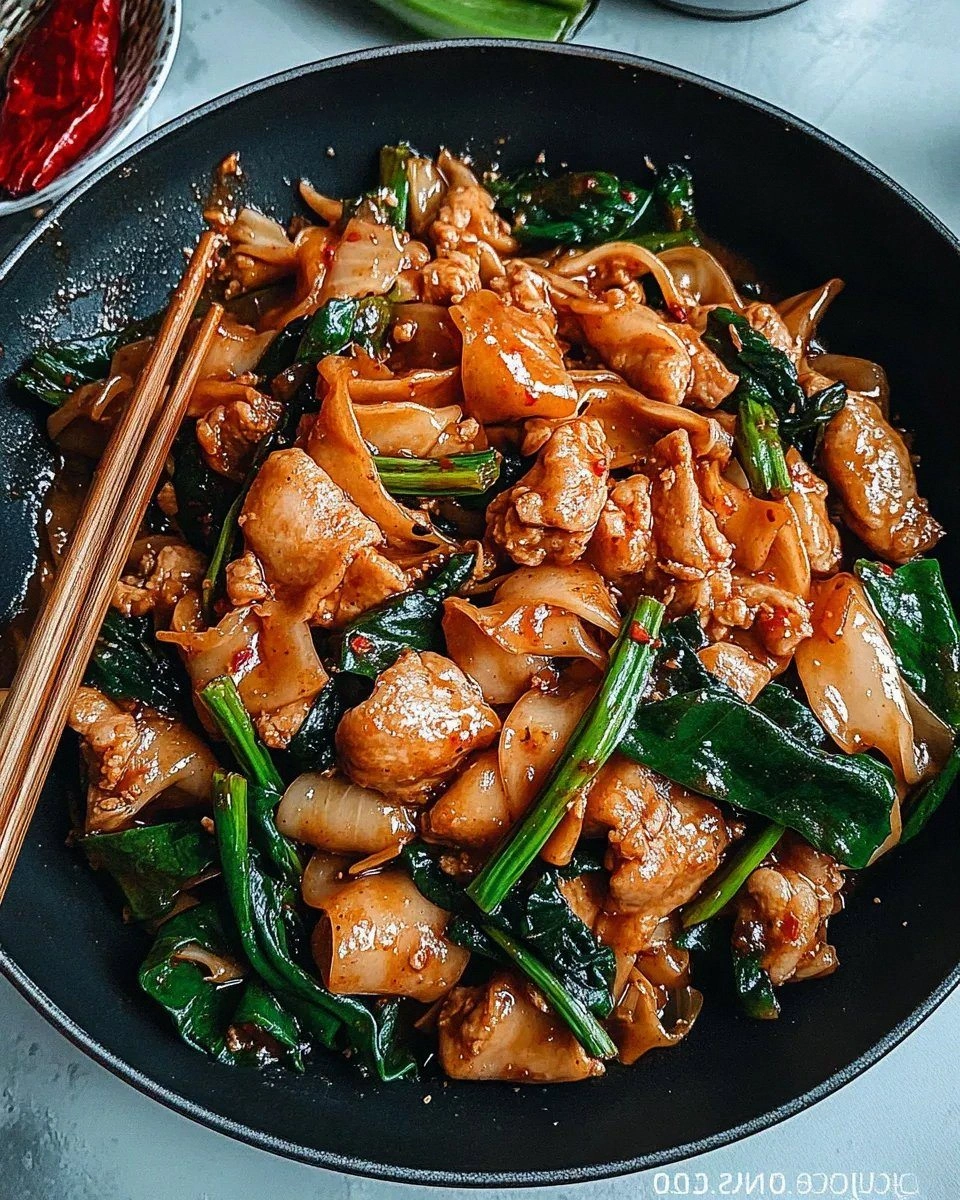
Picture this: I’m standing in my cramped kitchen, a half‑cooked pot of noodles bubbling like a mischievous cauldron, and my roommate just shouted, “You’re on fire again!” I laughed, because literally a small flame licked the edge of the wok, and that’s when the idea for the ultimate Spicy Drunken Noodles was born. I was desperate for something that could slap the taste buds awake, something that would make the smoke alarm cheer instead of scream. The scent of garlic and chilies hit the air before I even turned on the stove, and I swear the whole apartment paused for a beat, inhaling that intoxicating perfume of heat and umami. The first bite was a revelation—sweet, salty, smoky, and with a kick that made my eyes water in the best possible way, like a fireworks show in my mouth.
Now, let me paint the full sensory picture for you. The noodles are glossy and slightly chewy, each strand coated in a sauce that clings like velvet, while the basil leaves burst with a fragrant, peppery perfume that makes you close your eyes and sigh. The sizzle when the garlic hits the hot oil is a crisp, almost musical snap, and the heat from the chilies builds gradually, not like a sudden slap but a slow, seductive burn that lingers on the tongue. You can hear the soft rustle of fresh bean sprouts as they tumble into the pan, and feel the satisfying heft of the wok in your hands, balanced and sturdy. It’s a full‑body experience that hits sight, sound, smell, taste, and touch—all at once.
What makes this version stand out from every other drunken noodle recipe you’ve ever Googled? Most recipes either drown the dish in sauce or skimp on the heat, leaving you with something bland or soggy. I’ve cracked the code by mastering the balance between a light, glossy glaze and a bold, layered flavor profile that never overwhelms. The secret lies in a quick‑fire stir‑fry technique that sears the noodles just enough to give them that coveted “char‑kissed” edge, while still keeping the interior tender and supple. And there’s a surprise ingredient that most cooks overlook—a splash of dark soy sauce that adds depth without darkening the whole dish into a murky mess.
Okay, ready for the game‑changer? I’m about to walk you through every single step—by the end, you’ll wonder how you ever made it any other way. I dare you to taste this and not go back for seconds; I’ll be honest—I ate half the batch before anyone else got to try it, and that’s a confession I’m not even sorry for. So grab your wok, your appetite, and let’s dive into the most unforgettable Thai delight you’ll ever make at home.
What Makes This Version Stand Out
- Flavor Explosion: The sauce is a harmonious trio of soy, fish, and oyster sauces, each contributing salty, umami, and sweet notes that dance together without ever stepping on each other's toes.
- Heat Balance: Fresh Thai bird’s eye chilies deliver a clean, sharp heat that builds gradually, unlike the lingering burn of dried chilies that can dominate the palate.
- Texture Contrast: The wide rice noodles stay chewy on the inside while the edges get a light char, giving you that satisfying snap you crave from a good stir‑fry.
- Simplicity: Only ten minutes of active cooking time are needed once everything is prepped, making it perfect for a weeknight dinner without sacrificing flavor.
- Ingredient Quality: Using fresh Thai basil and high‑quality fish sauce elevates the dish from ordinary to restaurant‑worthy in an instant.
- Crowd Reaction: This dish consistently gets the “wow” reaction at dinner parties, with guests reaching for seconds and asking for the recipe.
- Make‑Ahead Potential: The sauce can be pre‑made and stored, so on a busy night you just toss in the noodles and protein for a lightning‑fast meal.
- Versatility: Swap chicken for shrimp, tofu, or even beef, and the dish still shines—making it adaptable to any dietary preference.
Inside the Ingredient List
The Flavor Base
Garlic (3 cloves, minced): Garlic is the aromatic backbone, releasing a sweet, caramelized aroma as it hits the hot oil. If you skip it, the dish loses its depth and will feel flat. A good swap is shallots for a milder, sweeter note, but don’t overdo it or you’ll mask the chilies.
Thai Bird’s Eye Chilies (2, finely sliced): These tiny powerhouses bring a clean, bright heat that tingles the palate without overwhelming. Missing them? Use a pinch of red pepper flakes, but the flavor will shift toward a dried, smoky profile.
Dark Soy Sauce (2 tbsp): This adds a subtle caramel richness and a deep color without making the dish too salty. Light soy sauce alone would leave the noodles looking pale and taste one‑dimensional. If you can’t find dark soy, a dash of molasses can mimic the sweetness.
The Texture Crew
Wide Rice Noodles (8 oz, dry): These noodles give the dish its signature chewiness, soaking up the sauce while retaining a slight bite. If you substitute with thin rice vermicelli, the texture becomes too soft and the sauce will slide off. Look for noodles made from 100% rice flour for the best mouthfeel.
Red Bell Pepper (1, sliced): Adds a sweet crunch that balances the heat and provides a pop of color. Skipping it removes that essential sweet counterpoint, making the dish feel one‑note. You can replace it with sliced carrots for extra sweetness.
Bean Sprouts (½ cup): They bring a fresh, crisp bite that brightens the dish right before serving. If you leave them out, the noodle‑to‑sauce ratio feels heavier. Rinse them thoroughly and pat dry to keep them crunchy.
The Unexpected Star
Thai Basil (1 cup, loosely packed): The basil’s peppery, slightly sweet flavor lifts the entire dish, making it taste like it came from a Bangkok street stall. If you can’t find Thai basil, holy basil or even a mix of regular basil with a pinch of mint can work, though the flavor will shift.
Fish Sauce (1 tbsp): This liquid umami is the secret weapon that adds depth without obvious fishiness. Omit it and the dish will lack that authentic Thai backbone. Use a high‑quality, sustainably sourced fish sauce for the best result.
The Final Flourish
Sugar (1 tsp): A tiny pinch of sugar balances the saltiness and acidity, rounding out the flavor profile. Without it, the sauce can taste harsh. You can substitute with a drizzle of honey for a subtle floral note.
Oyster Sauce (1 tbsp): Adds a silky richness and a hint of mushroom earthiness. Skipping it makes the sauce feel thinner. If you’re vegetarian, mushroom soy sauce is a solid alternative.
Everything's prepped? Good. Let's get into the real action...
The Method — Step by Step
Start by soaking the dry rice noodles in warm water for about 15 minutes, or until they’re pliable but still firm to the bite. Drain them well and set aside, tossing them lightly with a drizzle of oil to keep them from sticking together. This step is crucial—if the noodles clump, you’ll end up with a gummy mess that no amount of sauce can fix. While the noodles soak, gather all your aromatics; having everything within arm’s reach is the secret to a smooth stir‑fry.
Heat a wok or large skillet over high heat until a drop of water evaporates instantly; we’re talking a screaming hot surface. Add 2 tbsp of vegetable oil and swirl to coat. When the oil shimmers, add the minced garlic and sliced chilies, listening for that immediate sizzle that signals flavor release. Stir‑fry for 20‑30 seconds, being careful not to let the garlic burn—burnt garlic tastes bitter and will ruin the dish.
Kitchen Hack: If your wok isn’t super‑hot, pre‑heat a metal spatula in the oil first; it helps raise the temperature instantly.Next, add your protein—thinly sliced chicken breast works beautifully. Spread the pieces in a single layer, letting them sear for about 1 minute before stirring. You’ll hear a faint crackle as the meat caramelizes, creating those coveted char‑kissed edges. Cook until the chicken is just about 80 % done; it will finish cooking with the noodles, preventing over‑cooking.
Time to bring in the vegetables. Toss in the sliced red bell pepper and bean sprouts, stirring quickly so they stay crisp. The pepper should retain a slight crunch, and the sprouts should remain bright and airy. If you overcook them, they’ll wilt and lose their fresh snap, turning the dish into a soggy mess.
Now, the sauce showdown. In a small bowl, whisk together 2 tbsp dark soy sauce, 1 tbsp light soy sauce, 1 tbsp fish sauce, 1 tbsp oyster sauce, and 1 tsp sugar. Add a splash of water (about ¼ cup) to loosen it up. Pour the mixture over the wok, letting it bubble and coat every ingredient. You’ll notice the sauce thickening and clinging to the noodles like a glossy veil.
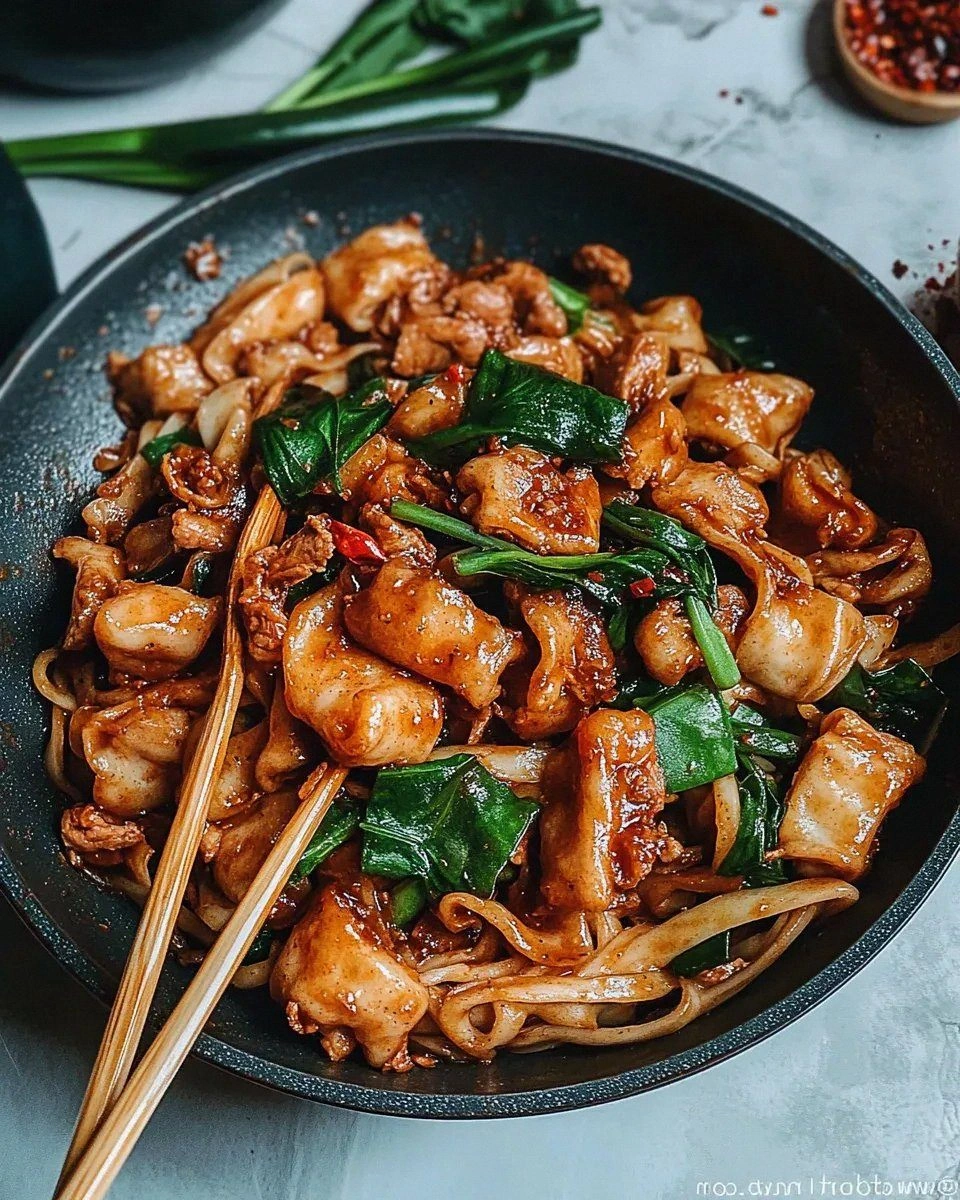
Introduce the soaked noodles to the wok, using tongs to gently fold them in. The high heat should cause the noodles to “sear” for about 2‑3 minutes, developing those coveted, slightly crispy edges. Keep the noodles moving constantly to avoid sticking. This is the moment of truth—watch for the noodles to turn a glossy amber color and for the edges to start pulling away from the pan.
Watch Out: If the wok cools down too quickly, the noodles will steam instead of sear, resulting in a soggy texture. Keep the heat high and work quickly.Just before finishing, fold in the fresh Thai basil leaves. The residual heat wilts them in seconds, releasing a fragrant, peppery aroma that fills the kitchen. Toss everything together for another 30 seconds, ensuring the basil is evenly distributed but not overcooked. Over‑cooking basil makes it turn brown and lose its bright flavor.
Give the dish a final taste check. Adjust salt with a pinch of extra fish sauce or a dash of light soy sauce if needed. The flavor should be a perfect balance of salty, sweet, and spicy, with a lingering heat that makes you want another bite. Serve immediately, garnished with extra basil or a wedge of lime if you like a citrus punch.
That's it — you did it. But hold on, I've got a few more tricks that'll take this to another level...
Insider Tricks for Flawless Results
The Temperature Rule Nobody Follows
The wok must be smoking hot before anything touches it. If you’re using an electric stove, pre‑heat the wok for at least 5 minutes on high; a cooler surface will steam the noodles instead of searing them. I once tried to rush this step and ended up with mushy noodles that clung together like glue. Trust the heat, and the noodles will develop that signature char that makes every bite exciting.
Why Your Nose Knows Best
Before you even taste, let your nose do the judging. The moment the garlic and chilies hit the oil, you should smell a sweet, nutty aroma—if it smells burnt, the heat is too high. A fragrant, fresh basil scent right before serving signals that the herbs are perfectly wilted. Trust these olfactory cues; they’re more reliable than a timer.
The 5‑Minute Rest That Changes Everything
After you finish cooking, let the noodles sit in the wok off the heat for about five minutes, loosely covered with a lid. This brief rest allows the flavors to meld and the sauce to thicken slightly, giving each strand a glossy coat. Skipping this rest leaves the dish tasting disjointed, as if the components never truly met.
Swap the Protein, Not the Soul
Whether you’re a meat lover or a plant‑based enthusiast, the key is to keep the protein thin and quick‑cooking. Shrimp, thinly sliced beef, or firm tofu all work, but they must be added at the right moment to avoid overcooking. Overcooked shrimp become rubbery, and tofu can crumble if handled roughly.
Control the Heat Without Drowning the Dish
If you find the sauce too thick, add a splash of chicken broth or water—just a tablespoon at a time. Too much liquid will make the noodles soggy, turning the dish into a soupy mess. The goal is a sauce that clings, not pools.
Creative Twists and Variations
This recipe is a playground. Here are some of my favorite ways to switch things up:
Peanut‑Butter Drunken Noodles
Add a tablespoon of smooth peanut butter to the sauce for a creamy, nutty undertone. The peanut’s richness balances the heat, creating a dish reminiscent of Thai satay. Perfect for those who love a richer mouthfeel.
Coconut‑Milk Infusion
Stir in ¼ cup of coconut milk during the sauce stage for a subtle sweetness and silky texture. The coconut mellows the chilies, making the dish more approachable for milder palates while still delivering that Thai vibe.
Veggie‑Only Version
Swap the chicken for extra mushrooms, zucchini, and snap peas. The mushrooms add an earthy umami that mimics meat, while the snap peas provide an extra crunch. This variation is great for a lighter, plant‑focused meal.
Smoky Charred Version
Before adding the noodles, give the wok a quick blast of charcoal or use a cast‑iron skillet to achieve a deeper, smoky char. The smoky notes add a layer of complexity that feels like street‑food magic.
Sweet‑Heat Fusion
Incorporate a tablespoon of honey and a pinch of cinnamon into the sauce. The honey amplifies the natural sweetness of the bell pepper, while cinnamon adds a warm, aromatic depth that pairs surprisingly well with the chilies.
Storing and Bringing It Back to Life
Fridge Storage
Transfer leftovers to an airtight container and store in the refrigerator for up to 3 days. The noodles will continue to absorb sauce, so add a splash of water or a drizzle of oil before reheating to revive the texture.
Freezer Friendly
Portion the cooked noodles and sauce into freezer‑safe bags, removing as much air as possible. Freeze for up to 2 months. Thaw overnight in the fridge, then reheat in a hot wok with a little oil; the dish will taste almost as fresh as the original.
Best Reheating Method
Heat a splash of oil in a wok over medium‑high heat, add the frozen or refrigerated noodles, and stir‑fry for 3‑4 minutes. Add a teaspoon of water to create steam, which helps the noodles regain their softness without becoming mushy. Finish with a quick toss of fresh basil for a burst of freshness.