I was in the middle of a frantic Tuesday night when a friend dared me to create a dessert that could survive a three‑hour brunch marathon and still look like it belonged on a glossy magazine spread. My pantry was a chaotic mess of half‑used yogurt, a lonely tub of cream cheese, and a bag of strawberries that were either perfectly ripe or on the brink of turning into jam. I tossed a handful of the berries into a blender, slapped together a crust with whatever crumbs I could find, and set the oven to a temperature I was pretty sure was “just right.” The result? A cheesecake that sang, swirled, and practically begged for a second slice. I dare you to taste this and not go back for seconds.
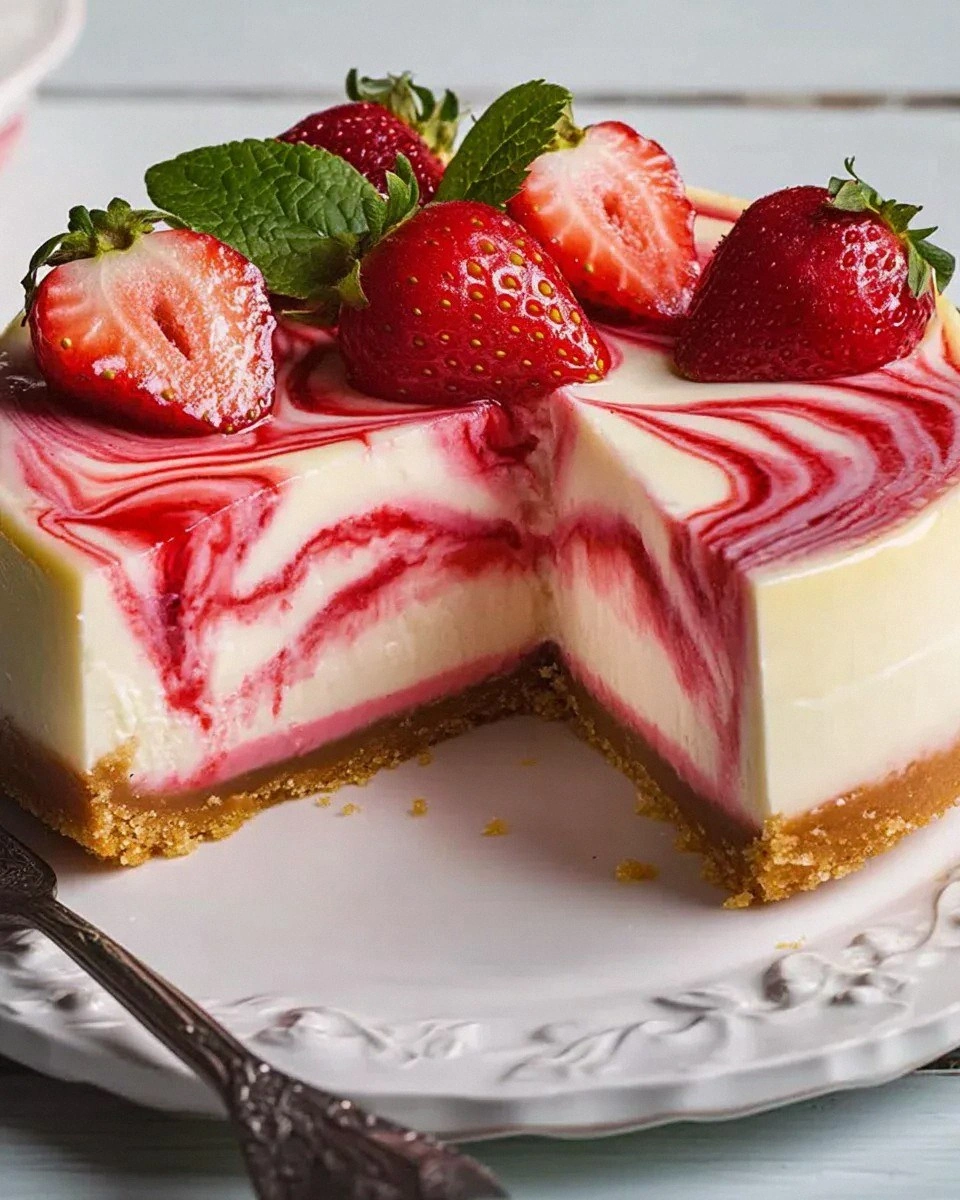
Picture this: the kitchen humming with the low whirr of the convection fan, the buttery scent of a graham‑cracker crust rising like a sunrise, and the faint tang of lemon cutting through the sweet strawberry perfume. The moment the cheesecake hits the water bath, you hear a gentle sizzle that tells you the batter is setting just the way it should—smooth, glossy, and utterly inviting. When you finally pull it out, the top is a marble masterpiece of pink swirls against a creamy ivory canvas, and the edges are just a whisper of golden crust, crisp enough to crack like thin ice under a spoon.
Most recipes get this completely wrong. They either drown the cheesecake in a sugary glaze that masks the delicate tang of cream cheese, or they skip the water bath and end up with a cracked, dry disaster that looks like a construction site. This version stands out because I use a simple strawberry puree that’s thickened just enough to swirl without bleeding, a buttery graham‑cracker base that holds together without a metal pan, and a gentle bake that keeps the interior as soft as a cloud. The secret ingredient? A splash of heavy cream folded into the filling at the very end, turning the texture from “good” to “pure indulgence.”
Okay, ready for the game‑changer? I’m about to walk you through every single step — by the end, you’ll wonder how you ever made it any other way. Stay with me here — this is worth it.
What Makes This Version Stand Out
- Flavor Explosion: The strawberry swirl isn’t just a decorative afterthought; it’s a concentrated burst of summer that cuts through the richness of the cream cheese, creating a balanced sweet‑tart harmony.
- Velvet Texture: By incorporating heavy cream and sour cream, the filling stays luxuriously creamy, almost like a mousse that refuses to set too firm.
- Simplicity: No fancy equipment, no fancy techniques—just a regular 9‑inch springform pan, a mixing bowl, and a splash of patience.
- Unique Swirl Method: The swirl is achieved by dolloping the strawberry puree onto the batter and using a knife to create a marble effect, ensuring every slice has its own work of art.
- Crowd Reaction: This cheesecake has been known to cause spontaneous applause at dinner parties, and it’s the kind of dessert that turns casual guests into lifelong fans.
- Ingredient Quality: Using full‑fat cream cheese and real strawberries (fresh or frozen) guarantees depth of flavor that powdered mixes can’t mimic.
- Gentle Baking: A water bath (bain‑marie) prevents the dreaded cracks, keeping the surface smooth enough to photograph without a filter.
- Make‑Ahead Potential: Once baked and chilled, the cheesecake can sit in the fridge for up to three days, making it perfect for holiday spreads or weekend brunches.
Inside the Ingredient List
The Flavor Base
The strawberries are the heart of this dessert. Fresh berries bring a bright, natural sweetness, while frozen ones offer convenience and consistent flavor year‑round. If you skip the lemon juice, the puree can taste flat; the acidity brightens the fruit and helps it set with the cornstarch. Speaking of cornstarch, it acts like a tiny net, catching water molecules so the puree stays thick enough to swirl without bleeding into the batter.
The Texture Crew
Graham‑cracker crumbs and butter form the crust. The crumbs provide a subtle caramel note, and the butter binds them into a firm, buttery base. If you’re gluten‑free, swap the crumbs for gluten‑free oat or almond flour crumbs—just make sure they’re finely ground. The cream cheese is the star of the filling; its high fat content creates that melt‑in‑your‑mouth feel. Skipping the sour cream would make the texture too dense, while the heavy cream adds a silkiness that’s almost buttery.
The Unexpected Star
Eggs are the silent workhorses that give the cheesecake its structure. They coagulate gently in the water bath, turning liquid into a firm yet tender custard. Over‑beating the eggs can trap air, leading to bubbles that rise during baking. The vanilla extract, though a small amount, adds a warm background note that ties the strawberry and cream cheese together.
The Final Flourish
Granulated sugar appears three times in this recipe, each serving a distinct purpose: sweetening the strawberry puree, the crust, and the filling. Using the same type of sugar ensures a consistent texture throughout. If you prefer a less sweet version, reduce the sugar in the crust by a tablespoon; the tartness of the strawberries will still shine.
Everything's prepped? Good. Let's get into the real action...
The Method — Step by Step
Preheat your oven to 325°F (163°C). While the oven warms up, line the bottom of a 9‑inch springform pan with parchment paper and lightly grease the sides. This little prep step prevents the crust from sticking and makes the release flawless later on.
Combine the graham‑cracker crumbs, ⅓ cup granulated sugar, and melted butter in a bowl. Stir until the mixture resembles wet sand. Press the crumb mixture firmly into the bottom of the pan, creating an even layer that’s about ½‑inch thick. Watch the pressure! Too light and the crust will crumble; too hard and it becomes a dense brick.
Place the crust in the freezer for 10 minutes while you work on the filling. This quick chill solidifies the butter, ensuring the crust stays crisp when the cheesecake bakes.
Kitchen Hack: If you’re short on freezer space, set the crust on a metal tray in the fridge; the cold metal speeds up the solidification.In a medium saucepan, combine the strawberries, ¼ cup granulated sugar, lemon juice, and the cornstarch‑water slurry. Cook over medium heat, stirring constantly, until the mixture thickens and becomes a glossy jam‑like puree. Remove from heat and let it cool to room temperature; this is where the aroma of fresh strawberries really hits you.
While the strawberry puree cools, beat the cream cheese in a large bowl until smooth and creamy, about 2 minutes. Gradually add 1 cup granulated sugar, then the eggs one at a time, mixing just until incorporated. Over‑mixing can incorporate too much air, which leads to cracks later.
Stir in the vanilla extract, sour cream, and heavy cream. The batter should look silky and slightly glossy. Pro tip: Scrape the sides of the bowl with a rubber spatula to ensure no pockets of unmixed cream cheese remain.
Pour half of the cheesecake batter over the chilled crust, spreading it evenly. Drop spoonfuls of the cooled strawberry puree over the batter, then use a thin knife or skewer to swirl the puree through the batter, creating a marble effect.
Watch Out: If the puree is too runny, it will bleed into the batter and ruin the swirl. Make sure the puree has thickened properly before adding it.Cover the springform pan tightly with aluminum foil, sealing the edges to prevent water from seeping in. Place the pan in a larger roasting pan and pour hot water into the outer pan until it reaches about halfway up the sides of the springform pan. This water bath creates a gentle, even heat that keeps the cheesecake from cracking.
Bake for 30‑35 minutes, or until the edges are set and the center still has a slight jiggle when you gently shake the pan. The top should be a pale golden hue, not browned. Remove the cheesecake from the water bath and let it cool on a wire rack for 1 hour. That sizzle when it hits the pan? Absolute perfection.
Once cooled, run a thin knife around the edge of the springform pan to loosen the cake, then release the latch and remove the sides. Chill the cheesecake in the refrigerator for at least 4 hours, preferably overnight. This resting period lets the flavors meld and the texture firm up.
That's it — you did it. But hold on, I've got a few more tricks that'll take this to another level...
Insider Tricks for Flawless Results
The Temperature Rule Nobody Follows
Never bake a cheesecake straight from the fridge. Let the batter sit at room temperature for 15‑20 minutes before pouring it over the crust. This prevents the batter from shocking the crust, which can cause cracks. I once tried to skip this step, and the result was a cheesecake that looked like a cracked desert floor—no one wanted a bite.
Why Your Nose Knows Best
When the water bath is simmering, you’ll notice a faint, sweet aroma rising from the oven. That scent signals the batter is setting gently. If you smell a burnt note before the timer, lower the oven temperature by 10‑15°F; the water bath can sometimes cause the oven to run hotter than displayed.
The 5‑Minute Rest That Changes Everything
After the cheesecake has cooled on the rack, let it sit uncovered for 5 minutes before covering it with plastic wrap. This tiny pause lets excess moisture evaporate, preventing a soggy top. Trust me, that extra five minutes makes the difference between a glossy finish and a dull, wet surface.
Swirl with a Toothpick, Not a Knife
If you want a more defined marble pattern, use a clean toothpick instead of a knife. The fine tip creates tighter, more intricate swirls that look professional on a plate. A friend tried using a fork and ended up with a chaotic mess—don’t let that happen to you.
Freeze for a Firmer Slice
If you’re serving the cheesecake the next day, pop it in the freezer for 20 minutes before slicing. The chilled surface makes the knife glide cleanly, giving you perfect, picture‑ready slices without crumbling. This is a trick I use for every party, and it never fails.
Creative Twists and Variations
This recipe is a playground. Here are some of my favorite ways to switch things up:
Chocolate Swirl Cheesecake
Replace the strawberry puree with a dark chocolate ganache (1 tbsp butter, 1 tbsp cocoa, ¼ cup sugar, and a splash of cream). Swirl it in the same way for a decadent, mocha‑kissed version that will win over any chocolate lover.
Lemon Blueberry Bliss
Swap strawberries for fresh blueberries and add the zest of one lemon to the filling. The citrus brightens the blueberry’s earthiness, creating a fresh springtime flavor profile.
Nutty Caramel Crunch
Stir chopped toasted pecans and a drizzle of caramel sauce into the batter before baking. The nuts add texture, while the caramel brings a buttery sweetness that pairs beautifully with the cream cheese.
Matcha Green Tea Dream
Blend 2 teaspoons of high‑quality matcha powder into the batter for a subtle earthy note and a gorgeous jade hue. Top with a dusting of powdered sugar for a sophisticated, Japanese‑inspired dessert.
Vegan Coconut Cheesecake
Replace cream cheese with a blend of soaked cashews, coconut cream, and a touch of coconut oil. Use maple syrup instead of granulated sugar, and the result is a dairy‑free version that still delivers that creamy swirl.
Storing and Bringing It Back to Life
Fridge Storage
Cover the cheesecake loosely with plastic wrap or a cake dome and store it in the refrigerator. It will stay fresh for up to 4 days. For best texture, let it sit at room temperature for 10 minutes before serving.
Freezer Friendly
Wrap the entire cheesecake (still in the springform pan) in a double layer of aluminum foil, then place it in a freezer‑safe bag. It freezes well for up to 2 months. When you’re ready to serve, thaw it in the fridge overnight, then add a splash of water to the surface before reheating—this steams it back to perfection.
Best Reheating Method
To revive a chilled slice, preheat your oven to 300°F (150°C), place the slice on a parchment‑lined tray, and add a teaspoon of water on top. Cover loosely with foil and heat for 8‑10 minutes. The added moisture prevents the cheesecake from drying out, and the gentle heat restores that melt‑in‑your‑mouth feel.