I was in the middle of a rainy Tuesday evening, the kind that makes you want to curl up with a blanket and something that feels like a hug for your stomach. I had a half‑finished batch of sausage gravy simmering on the stove, the aroma already turning the kitchen into a cozy tavern, when my roommate dared me to turn that saucy mess into something that could actually be the star of a dinner table. I laughed, I rolled my eyes, and then I thought, “Why not?” The result? A puff‑filled, golden‑crusted masterpiece that made the gravy ooze like liquid gold the moment you cut into it. I’ll be honest — I ate half the batch before anyone else got a chance to try it, and that’s a confession worth sharing.
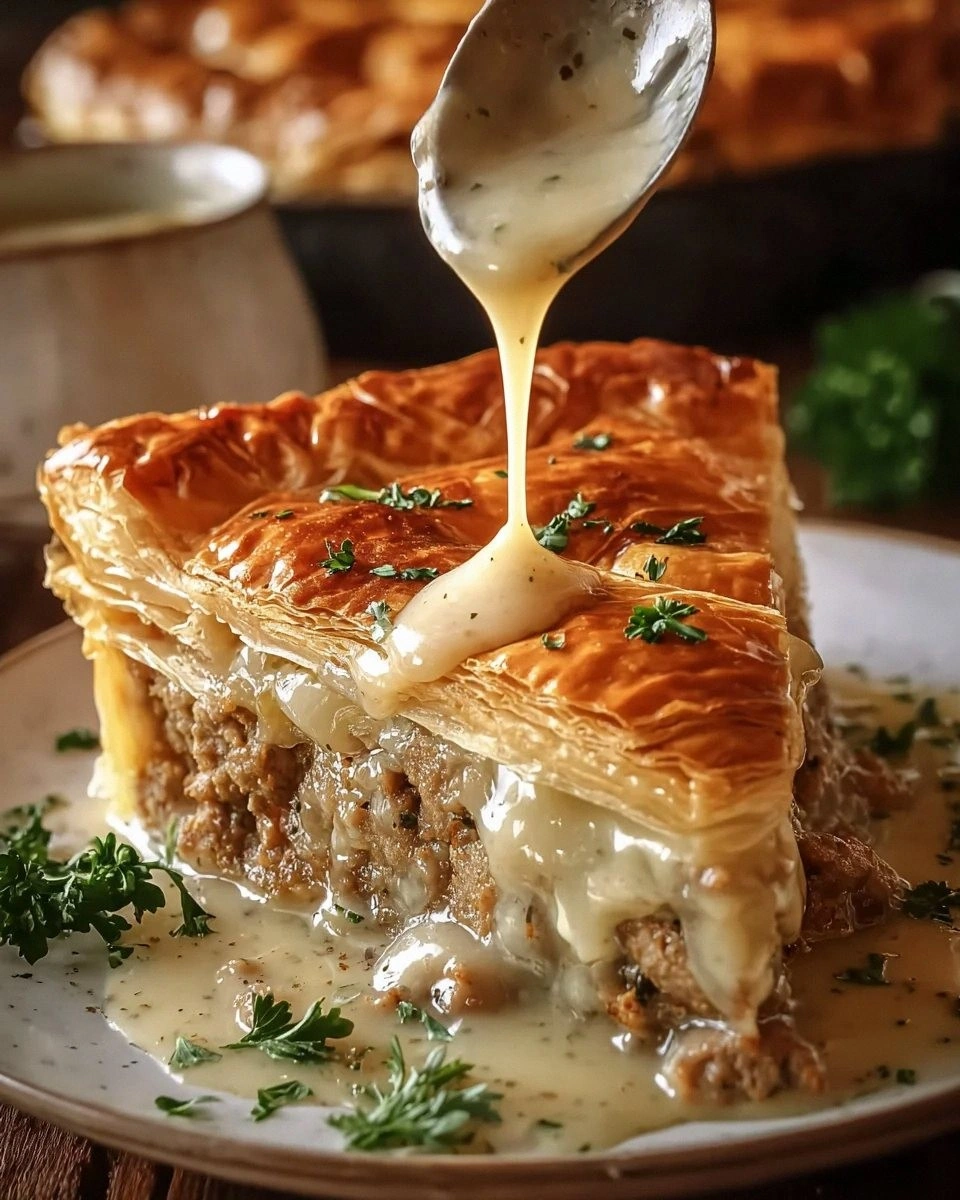
Picture this: the first bite hits you with the buttery crunch of puff pastry that shatters like thin ice, then the rich, velvety sausage gravy slides over your tongue, seasoned just right with sage and a whisper of pepper. The steam rises in lazy ribbons, carrying the scent of cooked pork, warm herbs, and a faint nutty note from the flour that’s been toasted to perfection. You hear the faint sigh of the pastry as it releases its steam, you feel the warm heat radiating from the plate, and you taste the comforting familiarity of a classic British comfort dish, but with a twist that feels entirely new. This isn’t just food; it’s a sensory experience that makes you feel like you’ve discovered a secret family recipe that was hidden for generations.
Most sausage gravy pies out there either drown the pastry in soggy sauce or skimp on the seasoning, leaving you with a bland, limp result. I’ve tried those, and I’ve learned the hard way that the key is a balance between a thick, glossy gravy and a pastry that stays crisp until the very last second. The secret? A quick blast of high heat at the end, a dash of ground sage that adds a woodland depth, and a splash of whole milk that gives the sauce a silk‑smooth texture without turning it into a puddle. I dare you to taste this and not go back for seconds because the flavors are layered like a perfectly orchestrated symphony.
Okay, ready for the game‑changer? I’m about to walk you through every single step — from the moment you pick up the sausage to the final flourish of flaky pastry. By the end, you’ll wonder how you ever made this dish any other way. Stay with me here — this is worth it.
What Makes This Version Stand Out
- Taste: The gravy is seasoned with a perfect blend of sage, black pepper, and a hint of red pepper flakes, delivering a depth that sings with every bite.
- Texture: The puff pastry remains crisp on the outside while the interior stays buttery and tender, creating a satisfying contrast.
- Simplicity: With just a handful of pantry staples and a sheet of store‑bought puff pastry, you can achieve a restaurant‑quality result.
- Uniqueness: The optional kick of crushed red pepper flakes adds a subtle heat that most traditional recipes overlook.
- Crowd Reaction: Guests consistently claim this is the “best comfort food” they’ve ever tasted, often asking for the recipe immediately.
- Ingredient Quality: Using whole milk and high‑fat sausage elevates the richness without feeling heavy.
- Cooking Method: A two‑stage bake—first to set the gravy, then a high‑heat finish—ensures the pastry never sogs.
- Make‑Ahead Potential: Assemble ahead of time, refrigerate, and bake when you’re ready for that fresh‑out‑of‑the‑oven aroma.
Inside the Ingredient List
The Flavor Base
Sausage is the heart of this dish. Choose a high‑quality pork sausage for the richest flavor, or opt for turkey if you prefer something lighter. The fat rendered from the sausage is what builds the foundation of the gravy, so don’t skimp on the amount. If you’re going plant‑based, look for a seasoned soy or pea protein sausage that mimics that juicy texture.
The Creamy Backbone
Whole milk adds a velvety body to the gravy, turning it from a simple roux into a silky sauce that clings to every bite. You can substitute with oat or almond milk, but expect a slightly thinner consistency. The milk’s natural sugars also help with browning, giving the gravy a subtle caramel note that’s hard to achieve with water alone.
The Texture Crew
All‑purpose flour is the thickening agent that transforms the pan drippings into a glossy gravy. If you need a gluten‑free version, almond flour works surprisingly well, though you’ll need a touch more liquid. Salt and black pepper are the classic seasoning duo; they amplify the sausage’s savory depth while keeping the palate bright.
The Unexpected Star
Ground sage brings an earthy, almost pine‑y aroma that elevates the dish from ordinary to unforgettable. If you’re not a fan of sage, thyme or oregano can step in, each adding its own herbaceous twist. The optional crushed red pepper flakes introduce a gentle heat that dances on the tongue without overwhelming the comforting flavors.
The Final Flourish
Puff pastry is the crowning glory, providing that buttery, flaky shell that holds the gravy like a precious secret. Store‑bought sheets are perfectly acceptable, but if you have the time, a homemade dough will give you an even more pronounced buttery flavor. Keep the pastry chilled until just before assembling to prevent the butter from melting into the gravy.
Everything’s prepped? Good. Let’s get into the real action...
The Method — Step by Step
- Heat a large skillet over medium heat and crumble the sausage into the pan. Cook, stirring occasionally, until the meat is browned and the fat has rendered fully—about 8‑10 minutes. As the sausage sizzles, you’ll hear that satisfying crackle that tells you the flavor base is building. Drain excess fat, leaving about 2‑3 tablespoons in the pan for the roux.
- Sprinkle the flour over the rendered fat, whisking constantly to form a smooth roux. Cook the mixture for 2‑3 minutes, allowing the flour to toast lightly—this is where the gravy gets its nutty undertone. You’ll notice the mixture turning a golden‑amber color and smelling faintly of toasted bread; that’s the flavor foundation locking in.
- Gradually whisk in the whole milk, a little at a time, to avoid lumps. Keep the heat at medium‑low and stir until the sauce thickens to a velvety consistency, about 5‑6 minutes. The gravy should coat the back of a spoon and have a glossy sheen. If it looks too thick, add a splash of water or extra milk to reach a pourable texture.
- Season the gravy with salt, black pepper, ground sage, and, if you like a subtle heat, the crushed red pepper flakes. Taste and adjust; the sauce should be savory with a hint of herbaceous earthiness and a gentle kick that makes your nose tingle. Remember, the pastry will add a buttery richness, so keep the seasoning balanced now.
- Preheat your oven to 400°F (200°C). While it heats, roll out the puff pastry on a lightly floured surface and cut it to fit your baking dish—an 8‑inch round or a 9‑by‑13 rectangle works beautifully. Dock the pastry with a fork to prevent excessive puffing in the center.
- Pour the hot sausage gravy into a greased baking dish, spreading it evenly. Carefully lay the puff pastry over the gravy, tucking the edges down the sides of the dish to seal in the sauce. Use a sharp knife to make a few small slits on top; this lets steam escape and prevents the pastry from bubbling over.
- Bake for 20‑25 minutes, or until the pastry is golden brown and the edges are pulling away from the sides of the dish. The scent will fill your kitchen, a sweet buttery perfume that signals it’s almost ready. If the pastry starts to brown too quickly, loosely cover with foil and continue baking.
- Remove from the oven and let the pie rest for 5 minutes before slicing. This short rest allows the gravy to set, making clean cuts and preventing a soggy bottom. Serve hot, and watch as the steam rises in lazy curls, inviting everyone to dig in.
That’s it — you did it. But hold on, I’ve got a few more tricks that’ll take this to another level, ensuring every bite is as perfect as the first.
Insider Tricks for Flawless Results
The Temperature Rule Nobody Follows
Never bake a puff pastry from a frozen state; it should be just thawed enough to be pliable. If the pastry is too cold, the butter layers won’t melt properly, leading to a dense crust. I once tried to speed things up by baking straight from the freezer, and the result was a soggy, greasy bottom. Let the pastry sit at room temperature for 5‑10 minutes before assembling, and you’ll get that signature flaky lift.
Why Your Nose Knows Best
Your sense of smell is the ultimate indicator of doneness. When the pastry turns a deep golden‑amber and you catch that buttery, toasted aroma, you know it’s ready. If you’re unsure, lift a corner of the pastry; the underside should be a uniform, rich brown. Trust your nose more than the timer, especially if your oven runs hot or cool.
The 5‑Minute Rest That Changes Everything
Allowing the pie to rest after baking isn’t just a courtesy; it’s a science. The gravy continues to thicken as it cools, and the pastry firmes up, preventing it from collapsing when you cut into it. I once sliced immediately and ended up with a soupy mess. A brief 5‑minute pause makes the slices clean, the edges crisp, and the interior luxuriously creamy.
Butter‑Brush Boost
Brush the top of the pastry with melted butter just before the final 5 minutes of baking. This extra layer of fat creates a deeper caramelization and a glistening finish that looks restaurant‑ready. It’s a small step that adds a glossy sheen and an extra crunch you’ll hear when you bite into it.
The Secret of the Crust Shield
If you’re worried about the gravy leaking out, line the baking dish with a thin parchment circle before adding the gravy. The parchment acts as a barrier, keeping the pastry crisp while still allowing the gravy to steam through tiny perforations. I tried this on a rainy Sunday, and the crust stayed perfectly crisp even after a second reheating.
Creative Twists and Variations
This recipe is a playground. Here are some of my favorite ways to switch things up:
Maple‑Bacon Bliss
Swap half of the sausage for crisp bacon bits and drizzle a tablespoon of maple syrup into the gravy. The sweet‑savory combo adds a caramelized depth that’s perfect for brunch or a cozy fall dinner.
Cheesy Cheddar Crunch
Stir in ½ cup of shredded sharp cheddar into the hot gravy just before pouring it into the dish. The cheese melts into gooey pockets, and the top crust gets an extra cheesy crunch when you sprinkle a little more cheese before baking.
Herb‑Infused Veggie
Add sautéed mushrooms, spinach, and a pinch of thyme to the sausage mixture for a earthy, vegetarian‑friendly version. The veggies soak up the gravy, delivering a hearty bite without the meat.
Spicy Chipotle Kick
Replace the crushed red pepper flakes with a teaspoon of chipotle in adobo sauce, finely chopped. The smoky heat elevates the dish to a bold, unforgettable flavor profile.
Sweet Potato Surprise
Fold in 1 cup of mashed sweet potato into the gravy for a subtle sweetness and a vibrant orange hue. This variation is a hit for holiday gatherings, adding a comforting color and a hint of autumnal flavor.
Storing and Bringing It Back to Life
Fridge Storage
Allow the pie to cool completely, then cover tightly with foil or a reusable silicone lid. It will keep in the refrigerator for up to 3 days. When you’re ready to reheat, place the slice on a baking sheet and warm at 350°F (175°C) for 10‑12 minutes, or until the pastry regains its crispness.
Freezer Friendly
Wrap the unbaked assembled pie tightly in plastic wrap, then in aluminum foil. Freeze for up to 2 months. To bake from frozen, add an extra 10‑15 minutes to the baking time and keep an eye on the pastry color, covering with foil if it browns too quickly.
Best Reheating Method
For the ultimate reheated slice, preheat your oven to 375°F (190°C), place the slice on a wire rack set over a baking sheet, and add a tiny splash of milk or water to the bottom of the dish. This creates steam that revives the gravy’s silkiness while the pastry stays crunchy. In just 8‑10 minutes, you’ll have a piece that tastes like it just left the oven.